¿Cómo se dice? A Spanish Video About Not Knowing What to Say

Published onSep 28, 2026 • • ViewMusic Videoblog posts
There’s a moment from my teaching career that has stuck with me for about 20 years.
A student was saying something in Spanish, completely unscripted. Sure, it was a little messy, as is to be expected from a student with just over a year of Spanish under their belt, but she was nailing the core of what she wanted to communicate.
And then she hit a word she didn’t know.
She was trying to say “scuba dive.” Now, we had used bucear in class a lot for some silly reason (it was one of those words that inexplicably became part of the classroom zeitgeist).
But in that moment she couldn’t recall it, got frustrated, and gave up.
I remember being so frustrated with myself. She walked away feeling like she had failed, and I didn’t know how to convince her otherwise.
And I want to be clear, she had been communicating in Spanish! Successfully! But one missing word, and she immediately convinced herself that she had failed.
Twenty years later, that moment finally made its way into ¿Cómo se dice?, our newest Señor Wooly music video.
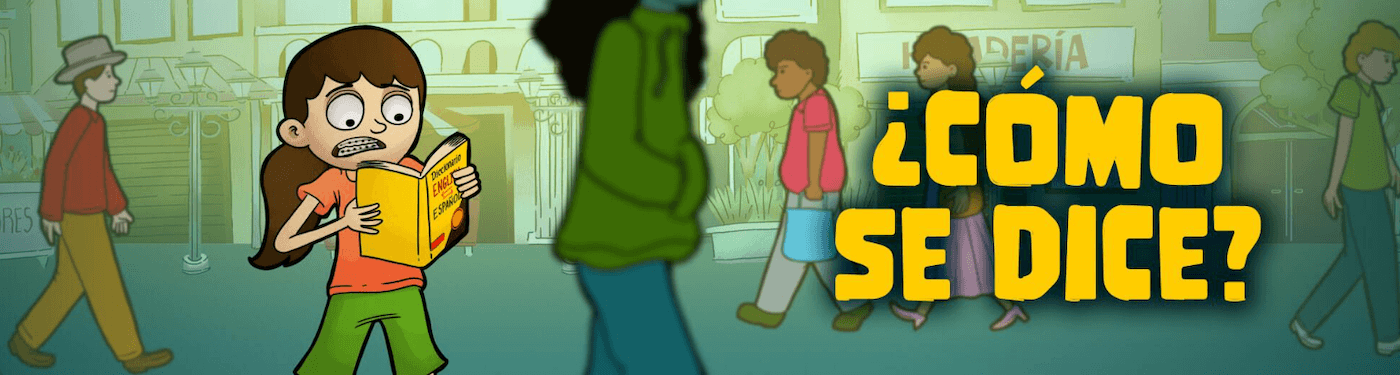
A video about the question that saves you
¿Cómo se dice? is designed to work with beginning Spanish students, even students in their first days of Spanish 1.
On the surface, the language goal is pretty obvious:
¿Cómo se dice ___?
Se dice ___.
But the video is really about what happens before a student asks that question.

In the video, a student named Sofía is trying to describe an image in Spanish. She gets partway through, hits language she doesn’t have, and stops.
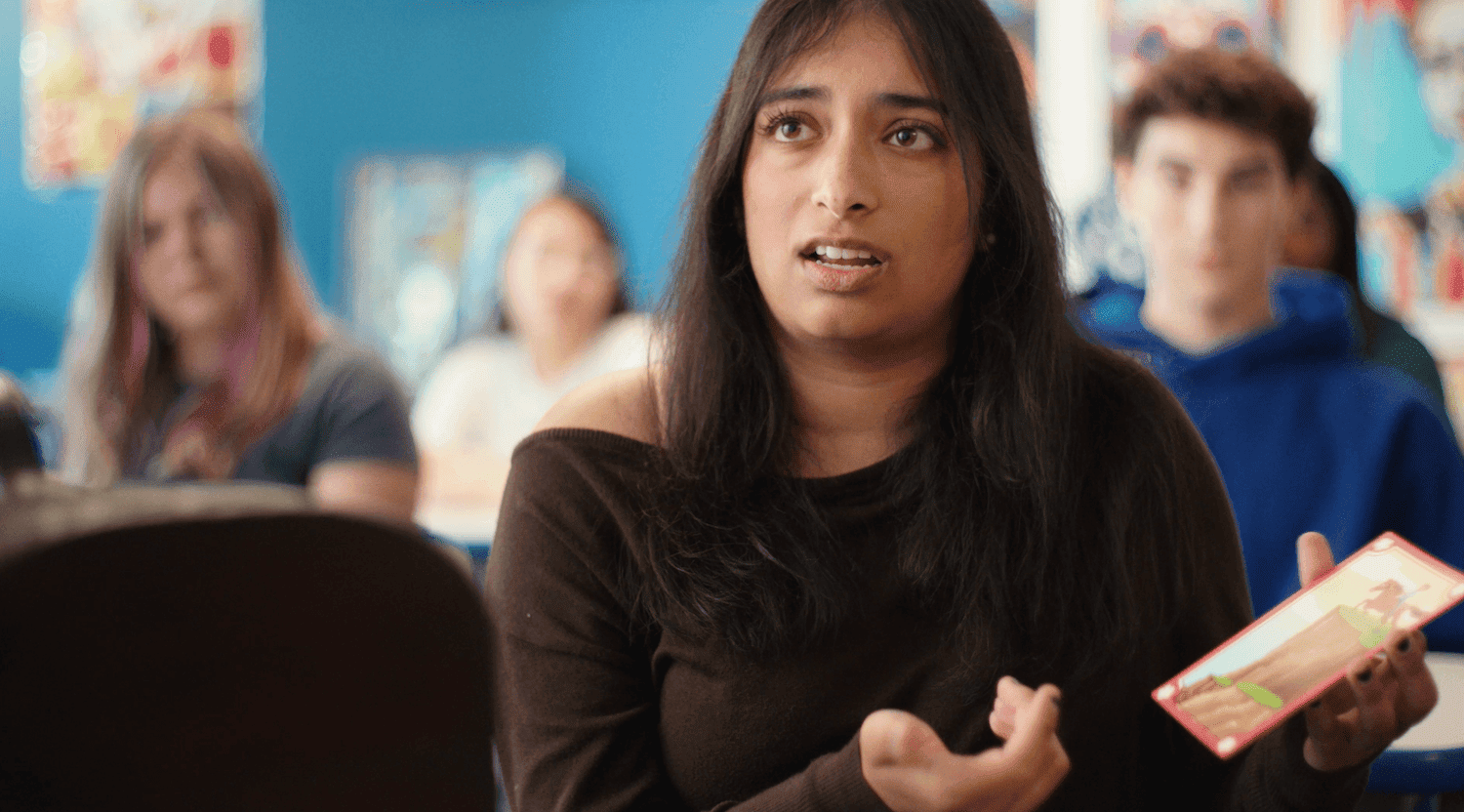
Her teacher tells her it doesn’t need to be perfect.
Sofía isn’t buying it. It’s different for her teacher, she argues. Her teacher’s Spanish is perfect.
The teacher tries to encourage her: “Usa la pregunta.”
But Sofía is too frustrated, and just like my student 20 years ago, she gives up.
Of course, it would be a bummer if the story ended there. To say much more would spoil a really fun, weird, surprising story. It’s funny, genuinely charming, and weird, while still having that slightly demented Wooly quality that will leave your students wondering who, exactly, would ever make something like this.
The other person is part of this, too
I spent time in Costa Rica as a teenager, and my Spanish was... not good.
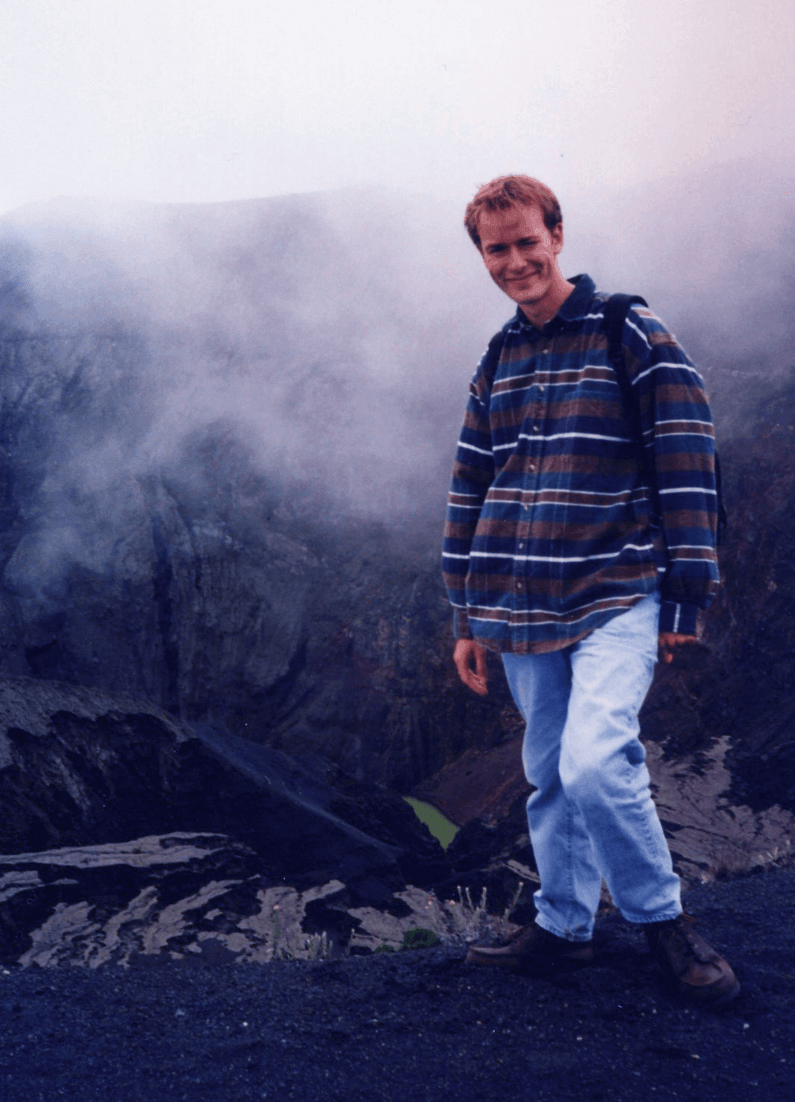
Me at Volcán Irazú in Costa Rica. And yes, you finally have photographic evidence that I once had hair.
I remember how much pressure I put on myself every time I tried to communicate. In my head, it was entirely my responsibility to make the interaction work. I needed to know the vocabulary. I needed to get the sentence right. I needed to pronounce everything well enough.
And if something broke down in the process, that meant I had failed. I carried more than a little shame about my own abilities, which only made me more hesitant to enter into those interactions in the first place.
It took me a long time to understand something that seems obvious now: the other person is part of this, too.
Most people want to understand you. They’ll make guesses, read your gestures, follow what you’re pointing at, and sometimes even supply the word you’re trying to remember. Meanwhile, you can describe, gesture, point, look something up, make a ridiculous sound effect, or simply ask:
¿Cómo se dice?
None of that is cheating.
The goal is communication, not proving you can do it without assistance.
And, while the video is of course silly and absurd, there is still that deeper message. It’s not enough for students to know how to say ¿Cómo se dice? They need to feel like they’re allowed to use it.
It goes way beyond ¿Cómo se dice?
Our five-day lesson plan for this video pushes beyond the phrase ¿Cómo se dice? into circumlocution and all the other ways students can keep communicating when the words fail them.
And it’s much more than five days of watching the video. In fact, students don’t even see it until Day 3. The first two days build the language and communication strategies they’ll need first, following the same approach I describe in Don’t Click Play Yet.
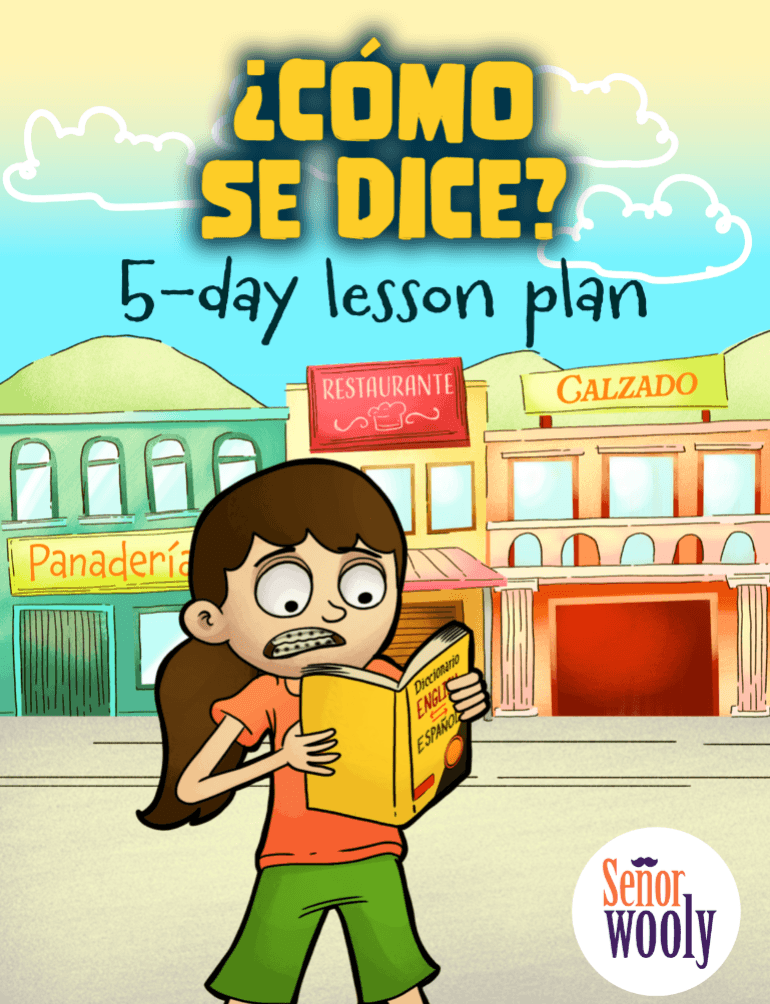
Ready to watch ¿Cómo se dice?
¿Cómo se dice? and its five-day lesson plan are included in Señor Wooly.
The lesson I wish I had taught 20 years ago
I still think about that student trying to remember bucear.
At the time, I wanted her to understand that she was doing well. I wanted her to understand that forgetting one word didn’t erase everything she had just successfully communicated.
But maybe she didn’t need bucear at all. She could have described it. Gestured. Asked for help. The conversation didn’t have to end just because she didn’t know one word.
Maybe I should have just reminded her:
Usa la pregunta.


